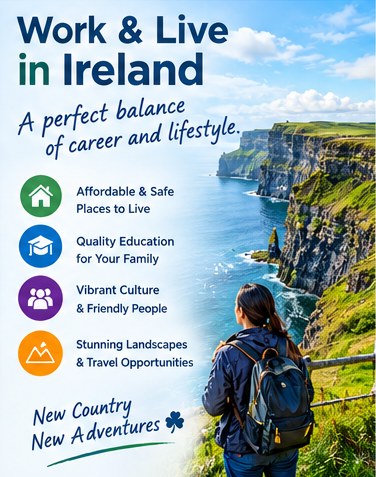
Work and Live in Ireland as a Nurse
A perfect balance of career and lifestyle.
Your job is only half of the move. This guide covers what daily life in Ireland is like for nurses: where to live, housing, cost of living, banking, transport, schools, healthcare and settling into your new community.
Choosing where to live
Where you work will largely decide where you live, but it helps to understand the differences between regions before you accept a job.
- Dublin. The capital has the most hospitals and the widest range of specialist roles. It is lively and international, but rents are the highest in the country and competition for housing is intense.
- Cork. Ireland’s second city has major teaching hospitals, a strong food culture and easy access to the coast. Living costs are high but lower than Dublin.
- Galway. A creative, student-friendly city on the west coast with a large university hospital. Housing is in short supply, so start searching early.
- Limerick and Waterford. Growing cities with regional hospitals and more affordable rents.
- Smaller towns. Regional hospitals and nursing homes across the country recruit actively. Life is quieter and cheaper, though you may need a car.
Finding accommodation
Housing is the biggest challenge for most new arrivals. Many employers offer temporary accommodation for the first weeks or months, so ask about this before you travel. Popular property websites list rooms and apartments, and Facebook groups for nurses and for your national community often share rooms and advice.
Expect landlords to ask for a deposit, usually one month’s rent, plus the first month in advance. Never send money for a property you have not seen or verified, as rental scams are common. Once you rent, your landlord should register the tenancy with the Residential Tenancies Board (RTB), which protects your rights.
Cost of living
Ireland is one of the more expensive countries in Europe. Rent is the largest cost, followed by energy, transport and childcare. Groceries are reasonably priced at discount supermarkets, and eating at home is far cheaper than eating out. A shared house in a city keeps costs manageable for single nurses, while families should budget carefully for a whole property.
Useful ways to save include shopping at discount supermarkets, using a Leap Card for public transport in cities, choosing accommodation close to work to reduce commuting, and comparing energy providers. Check the nurse salary guide to plan your monthly budget.
Your first weeks: essential tasks
- Register your immigration permission and get your Irish Residence Permit card.
- Apply for a PPS number so you are taxed correctly and can access public services.
- Open a bank account. Traditional banks and app-based banks are both popular. Bring your passport, IRP and proof of address.
- Get an Irish phone number. Prepaid and bill-pay plans are widely available and affordable.
- Register with Revenue myAccount to avoid emergency tax.
- Register with a local GP for your own healthcare.
Getting around
Dublin has buses, the Luas tram and DART commuter rail. Cork, Galway and Limerick have city bus networks, and intercity trains and coaches connect the main towns. Outside cities, public transport is limited and shift workers often need a car. You can drive for a period on certain foreign licences, and some countries have licence exchange agreements with Ireland; otherwise you will need to take the Irish driving test process. Car insurance can be expensive for new drivers in Ireland, so get quotes before buying a car.
Healthcare and schools for your family
As a resident, you can use the public health service. GP visits usually involve a fee unless you qualify for a medical card or GP visit card, and young children have free GP care. Many nurses choose private health insurance for faster access to some services, and some employers offer group schemes.
Public primary and secondary schools are free, though families pay for uniforms, books and some activities. Schools in popular areas fill quickly, so contact them as early as possible. Irish is taught in most schools, but children who arrive from abroad may be exempt in some cases. Childcare for younger children is costly, though national schemes help reduce fees.
Culture, community and faith
Irish people are known for being friendly, chatty and fond of humour. Conversation often starts with the weather. Pubs are social centres, but you do not have to drink to join in. Sport, especially Gaelic football, hurling, rugby and soccer, is a big part of community life.
International communities are well established. You will find Indian, Filipino, Nigerian, Pakistani and Brazilian associations, churches of many denominations, mosques, temples and gurdwaras, and shops selling familiar foods in all major cities. Many hospitals have networks for international staff that organise social events and offer peer support.
Weather and seasons
Ireland has a mild, changeable climate. Winters are rarely very cold but are dark, windy and wet. Summers are cool, with long evenings of daylight. A good waterproof jacket and layers will serve you better than heavy winter clothing.
Exploring Ireland
Days off are a chance to discover a beautiful country: the Cliffs of Moher, the Wild Atlantic Way, the Ring of Kerry, Connemara, Glendalough and castles in every county. Flights from Dublin, Cork and Shannon make Europe easy to reach for short breaks.
Frequently asked questions
Is it hard to find accommodation in Ireland?
Yes, especially in Dublin, Cork and Galway. Ask employers about temporary housing and start searching before you arrive.
Is Ireland safe for international nurses?
Ireland is generally safe and welcoming, with low violent crime compared with many countries and strong international communities.
Do I need a car in Ireland?
In cities you can usually manage without one. In rural areas and for shift work, a car is often needed.
Have a question about moving?
Get in touch and we will point you to the right guide.