Why Choose Nursing in Ireland?
Build your future in Ireland.
Ireland is one of the most popular destinations for internationally trained nurses. Here is an honest look at what makes it attractive, and what you should weigh up before you decide.
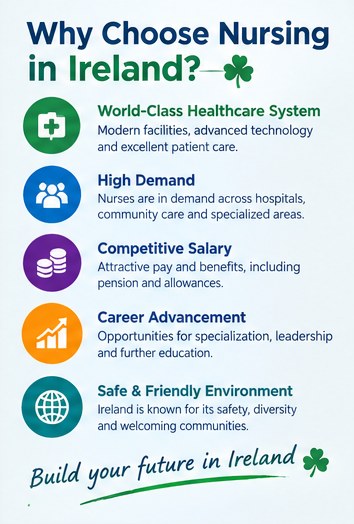
1. Nurses are in high demand
Ireland’s population is growing and ageing at the same time. More people are living longer with chronic conditions, and hospitals, community services and nursing homes need more nurses than Irish colleges can train. As a result, employers recruit internationally all year round, and nursing appears on the government’s list of critical skill occupations.
For you, high demand means choice. You can compare employers, locations and specialties instead of accepting the first offer. It also means many employers have experienced international recruitment teams who understand NMBI registration, adaptation and permits, and who can support you through each stage.
2. A modern, developing healthcare system
Ireland’s public health service is run by the Health Service Executive (HSE), alongside voluntary hospitals and a growing private sector. Major teaching hospitals in Dublin, Cork, Galway and Limerick offer specialist services, research and modern technology. The system is going through a long-term reform programme called Sláintecare, which aims to move more care into the community and improve access for patients.
Like every health system, it has pressures. Emergency departments can be very busy, and staffing is a constant topic in the news. Many nurses say the teamwork, the training and the respect for nursing make the challenges worthwhile.
3. Competitive pay and benefits
Public sector nurses are paid on national pay scales, so your salary is transparent and rises each year. You also receive premium pay for night duty, weekends and public holidays, a defined pension, paid annual leave and access to funded education. Private employers set their own packages and sometimes add relocation support or sign-on bonuses. See our nurse salary in Ireland page for details.
4. Clear career progression
Irish nursing has a well-defined career ladder. After gaining experience as a staff nurse, you can apply for senior staff nurse, clinical nurse manager, clinical nurse specialist and advanced nurse practitioner roles. Postgraduate diplomas and master’s programmes in areas such as critical care, emergency nursing, oncology and gerontology are widely available, and employers often support the cost. Learn more on our career opportunities page.
5. Family-friendly immigration routes
Because nurses are a critical skill, the main work permit for non-EEA nurses, the Critical Skills Employment Permit, comes with family benefits. Holders can usually bring their spouse or partner and children, and spouses may be allowed to work. After a qualifying period, you can apply for longer-term residence permission, which gives you more freedom to change employers. Read our nurse visa guide for the full process.
6. English-speaking and part of the EU
Working in English makes the transition easier for nurses who trained in English or have passed IELTS or OET. Ireland is also a member of the European Union, which matters for travel, business links and your long-term options. Irish nursing experience is respected internationally, which helps if you later want to work in another country.
7. A safe and welcoming country
Ireland consistently ranks well for safety and quality of life. People are known for their friendliness and humour, and international communities are well established in every city. You will find Indian, Filipino, African, Pakistani and Brazilian groups, places of worship of many faiths, and familiar foods in local shops. Many hospitals run social and support groups for international staff.
8. Work-life balance and travel
Shift patterns often include long days, which can mean more full days off each week. Ireland’s landscape is spectacular, from the Cliffs of Moher and the Wild Atlantic Way to Kerry’s mountains and historic towns. Cheap flights to the rest of Europe make weekend trips realistic.
What to consider before you move
A good decision is an informed one. Before you commit, think about these points.
- Housing costs. Rent in Dublin is among the highest in Europe, and finding accommodation takes time. Smaller cities and towns are more affordable.
- Process time. Registration, adaptation and permits can take many months. Plan your finances for this period.
- Weather. Winters are mild but grey and wet. Summers are cool rather than hot.
- Workload. Some wards are very busy. Ask about staffing levels and support during interviews.
- Distance from home. Consider time zones, flight costs and how often you will visit family.
Ireland compared with other destinations
Nurses often compare Ireland with the UK, Australia, Canada and the Gulf countries. The UK has a larger job market but is outside the EU. Australia and Canada have higher salaries in some areas but longer and more expensive registration processes. The Gulf offers tax-free pay but fewer routes to permanent residence and family settlement. Ireland stands out for its combination of a manageable registration process, family permits, an EU base and a path to long-term residence.
Who benefits most from nursing in Ireland
Ireland suits nurses who want a long-term career rather than a short contract. If you plan to settle with your family, value structured training and want a recognised route to residence, Ireland is a strong choice. It also suits experienced nurses who want to specialise, because postgraduate education is accessible and often funded. Newly qualified nurses can succeed too, especially in nursing homes and community roles that offer strong support while you build Irish experience.
Frequently asked questions
Is Ireland a good country for nurses?
For many international nurses, yes. Ireland offers strong demand, structured pay, career growth and family-friendly permits, balanced against high city rents.
Which nurses are most in demand in Ireland?
General nurses are needed everywhere, with particular demand in older person care, mental health, intellectual disability, critical care, emergency and theatre nursing.
Can nurses get permanent residence in Ireland?
Critical skills permit holders can apply for longer-term permission after a qualifying period, and later for long-term residence or citizenship if they meet the conditions.
Ready to take the first step?
Start by checking your eligibility and reading the NMBI registration guide.