Study Nursing in Ireland
Start your nursing career here.
Nursing in Ireland is a four-year honours degree that leads straight to NMBI registration. This guide explains the disciplines, where you can study, how entry works, what the course is like and where it leads.
How nursing education works in Ireland
All undergraduate nursing in Ireland is delivered as a four-year honours Bachelor of Science (BSc) degree. The programmes combine university study with extensive clinical placements in hospitals and community settings. In the final year, students complete a long paid internship placement as part of the healthcare team. Graduates are eligible to register with the NMBI in the division matching their programme.
Nursing disciplines
You choose your discipline when you apply. The main options are:
- General nursing for adult care in hospitals and the community
- Children’s and general (integrated) nursing, a combined programme leading to two registrations
- Psychiatric (mental health) nursing
- Intellectual disability nursing
- Midwifery, a separate four-year degree
Choose carefully, as each leads to a specific register and career path.
Where to study
Nursing degrees are offered by universities and technological universities across Ireland, including:
- Trinity College Dublin
- University College Dublin
- Dublin City University
- University College Cork
- University of Galway
- University of Limerick
- Atlantic Technological University
- Munster Technological University
- South East Technological University
- Dundalk Institute of Technology
Each institution partners with local hospitals for clinical placements. Compare courses by discipline, placement sites and student support.
Entry routes
- School leavers apply through the CAO (Central Applications Office), and places are allocated based on Leaving Certificate points and subject requirements. See our CAO points for nursing guide.
- Mature applicants aged 23 or over can apply through a separate mature entry route that usually includes a written assessment.
- QQI/FET applicants with relevant Level 5 qualifications, such as Nursing Studies, can compete for reserved places.
- International students should read our nursing courses for international students guide.
What the course is like
Years one to three combine lectures, labs and practice placements in different settings. Students learn anatomy, physiology, pharmacology, nursing theory, research, communication and clinical skills. The fourth year includes an extended internship placement where students are paid and work as part of the team while completing their studies. The course is demanding, but graduates are highly employable.
Costs and support
EU students who meet eligibility rules usually pay the annual student contribution rather than full tuition fees. Students may receive a grant through SUSI if they meet the criteria. Placement costs such as travel and accommodation can add up, and there have been allowances for nursing students on placement. Check current supports with your college.
Careers after graduation
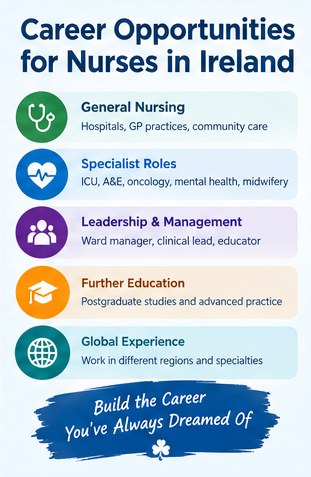
Irish nursing graduates are in high demand. Many are offered posts in the hospitals where they trained. Graduates can progress into specialist, management and advanced practice roles, or pursue postgraduate study. See nursing career opportunities in Ireland.
Frequently asked questions
How long is a nursing degree in Ireland?
Four years, leading to an honours BSc and NMBI registration.
Are nursing students paid in Ireland?
Students are paid during the fourth-year internship placement.
Can mature students study nursing in Ireland?
Yes. Applicants aged 23 or over can apply through the mature entry route.
Which nursing discipline should I choose?
Choose based on the patients and settings you want to work with; each leads to a separate register.
Check entry requirements
See how CAO points work for nursing.